
La Porte Directory Collections
The deepest verified run belongs to the La Porte County Historical Society Research Library. Its La Porte city directories begin with 1859 and continue in a substantial run through current editions, though the public holdings page does not list every year or publisher. County directories and a Michigan City series, which begins in 1890, sit beside the city set. Telephone books are shelved as a distinct series. Each set may arrange names, streets, and phone-era details in a different way.
| Collection | Years or span | Where kept | Access |
|---|---|---|---|
| La Porte city directories | 1859 through a substantial current run | Historical Society | Research room or correspondence; confirm edition and page |
| County directories | Exact run not posted | Historical Society | Ask for county, township, and address variants |
| Telephone directories | Exact years not posted | Historical Society and Indiana Room | In-person shelf research |
| Newspapers and obituaries | Late 1800s microfilm; obituary files mostly mid-1930s onward | LPCPL and Historical Society | Microfilm, index, digital search, or staff help |
| Maps, atlases, and plats | 1854 onward, with many dated sets | Historical Society, LPCPL, State Library | Physical and selected digital items |
No complete digitized city-directory run was verified. A catalog hit may point to a county history, index, or film record rather than images of the book. Start with the physical shelf, and ask which editions are present before planning a visit.
La Porte Directory Beginnings
The 1859 book is the earliest confirmed La Porte city directory in the local collection. It predates the present courthouse, built from 1892 to 1894, and gives early city research a firm date marker. Every later entry needs the same context. Publication year, page number, title, and imprint should travel with each copied line. Without those details, a name and address lose much of their value.
Local record keeping grew around institutions that still shape the search. The county was created in 1832. The Historical Society traces its library and natural-history roots to 1863. La Porte's Carnegie library opened in 1920. These dates help explain why one clue may sit at the museum while another lives on newspaper microfilm at the library. They do not prove that every edition survives.
| 1832 | La Porte County was created, with La Porte as county seat. |
|---|---|
| 1859 | Earliest confirmed La Porte city directory held locally. |
| 1863 | Local library and natural-history association roots began. |
| 1920 | The Carnegie Main Library opened. |
Read La Porte Directory Entries
A city directory row is a compact snapshot. Transcribe it before interpreting it. No scanned local entry was captured in the research, so no La Porte abbreviation should be guessed. An edition may show a surname, given name or initials, spouse notation, occupation, employer, street number, a dwelling mark, or a telephone number. Some books include an owner or renter symbol. That printed mark is not the same as a deed.
| Name | Copy surname, given name, initials, and punctuation as printed. |
|---|---|
| Household mark | Note a spouse, widow, or household sign without expanding it unless the key does so. |
| Work line | Preserve the occupation or business wording as historical context. |
| Address | Record number, direction, street spelling, suffix, and page. |
| Edition data | Keep the title, year, publisher if shown, and collection source. |
- Criss-cross directory
- A later book arranged by street or phone number rather than only by surname.
- Householder index
- A list centered on the person identified as the household head in that edition.
- Abbreviation key
- The book's own guide to shortened words and marks. Copy it before decoding an entry.
La Porte's Physical Directory Shelf
The Fern Eddy Schultz Research Library is inside the museum at 2405 Indiana Avenue, Suite 1. Regular private research is listed Tuesday through Saturday, 10:30 a.m. to 4 p.m. The museum lists hours of 10 a.m. to 4:30 p.m. and admission of $5 for adults and $4 for seniors. Call 219-324-6767 before travel to confirm the research room, copy rules, and requested volume. County historian Bruce R. Johnson is available by appointment at 219-362-3749.
Staff help visitors and correspondents identify material, but the Society does not promise a full research project. A useful request includes the exact current address, former spellings, target years, surname variants, lot or block if known, and source type. Ask staff to identify the item and edition. That keeps a city directory result tied to evidence.
The Historical Society describes its directory, map, and house-file collections on the official research page:

La Porte Library Research Route
The LPCPL Indiana Room is the main fallback when an online catalog is thin. Regional newspaper microfilm reaches the late 1800s. The room also has atlases, plats, historical maps, and local yearbooks. Every LPCPL location is a FamilySearch affiliate library, so some restricted digital collections can be opened on library equipment. Research help is available at 219-362-6156 extension 101 or help@laportelibrary.org.
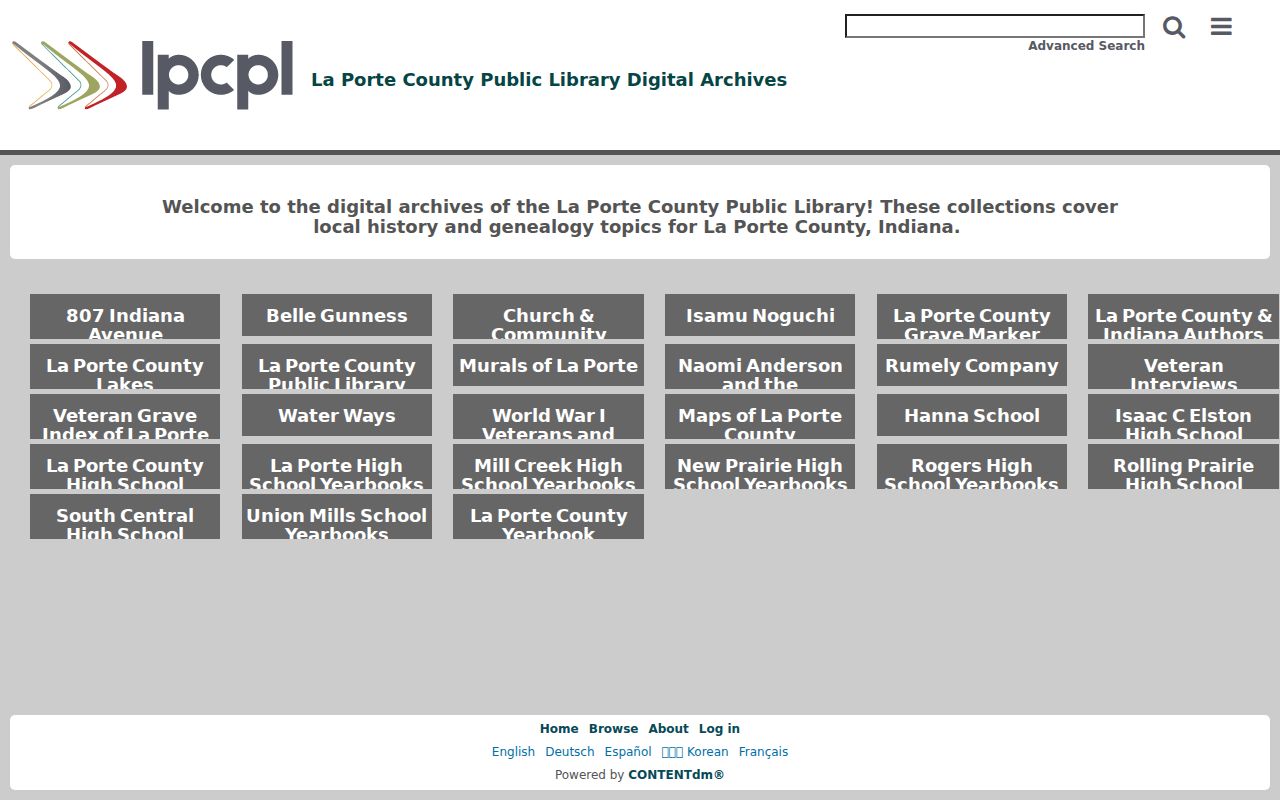
The LPCPL Digital Archives is a separate, round-the-clock clue source. Collections cover the 807 Indiana Avenue telephone building, churches, lakes, grave markers, Rumely Company material, local authors, and downtown murals with building histories. Save item metadata with the image and link.
The archive page shows how those local subjects are arranged:
Map La Porte Directory Addresses
Street text is more useful beside a dated map. The Historical Society has city views from 1854, 1866, and 1889, indexed atlases from 1874 and 1892, later atlases, many plat books, and Sanborn fire-insurance maps. A plat places a lot within a subdivision. A Sanborn sheet may show a footprint or public use. Neither should be treated as an occupant list.
Use the Indiana State Library La Porte County guide for catalog context:
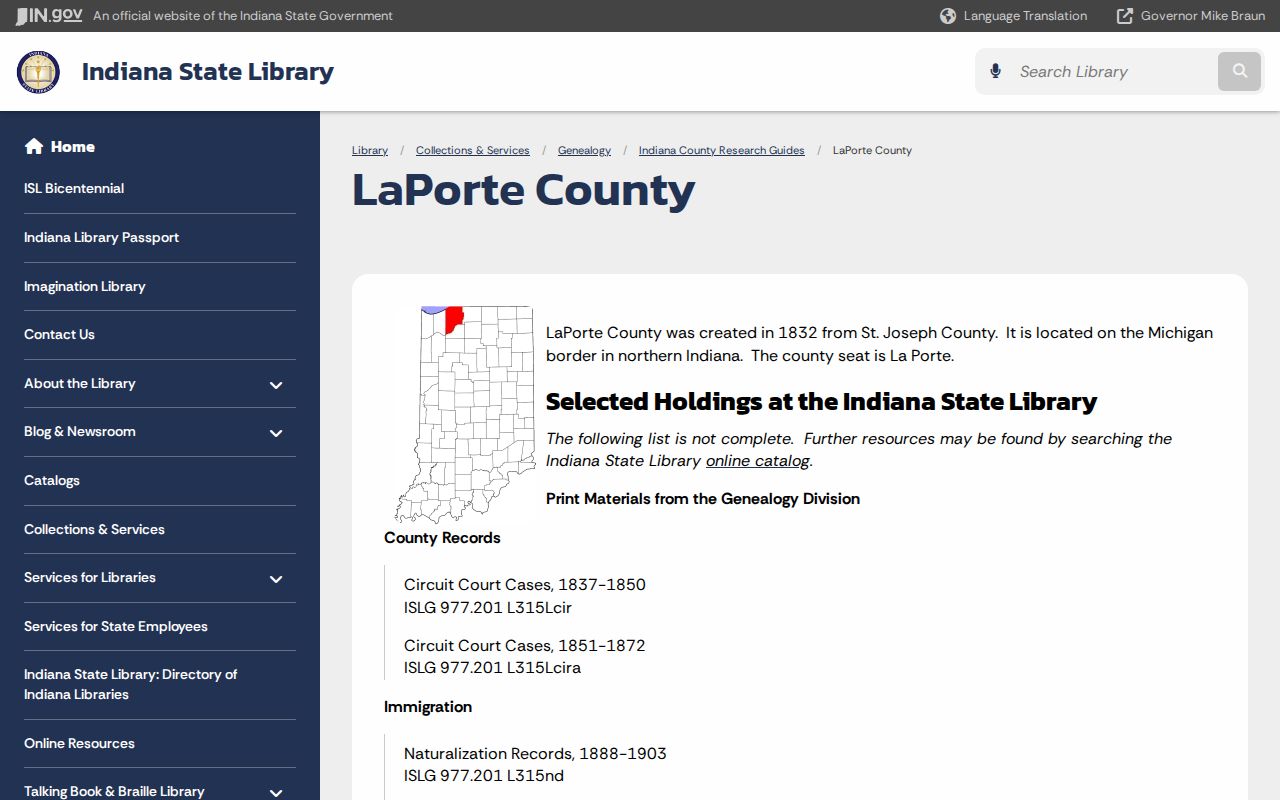
La Porte, LaPorte, a missing direction, or an older suffix can change the result. Compare map and directory years, and retain both spellings.
Confirm La Porte Directory Clues
A directory says where a person was listed. Newspapers can add a dated event, while obituaries may connect relatives or a cemetery. LPCPL microfilm and Society clipping files cover that bridge. The Herald-Argus obituary file is mostly mid-1930s to current, with an index from 1989 forward. The Michigan City News-Dispatch file begins in 1992. Older issues can be searched through Hoosier State Chronicles when available.
The newspaper screen offers another route:
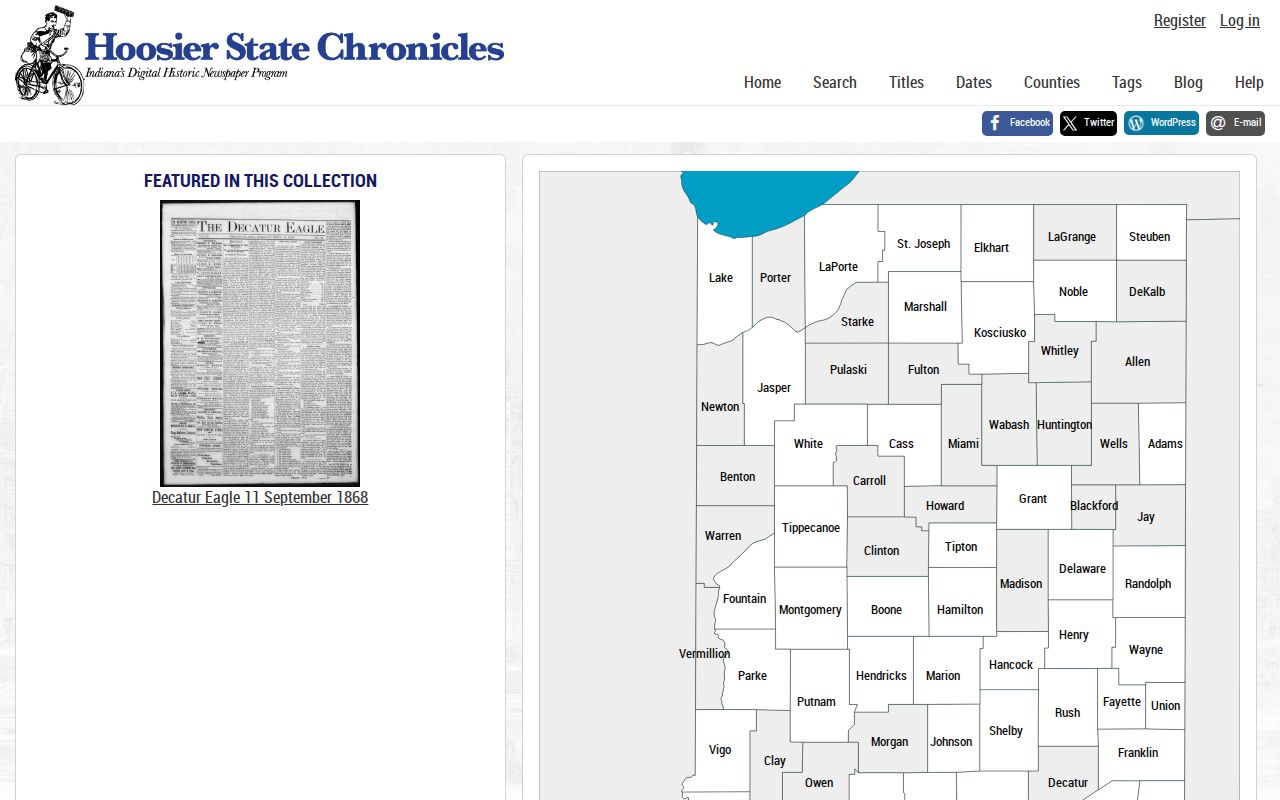
OCR can miss worn type. A failed text search means only that the inspected search found no match. Browse nearby dates or ask staff to check microfilm.
Trace Families Through La Porte Directories
Build the trail one dated source at a time. A resident can disappear because of a move, death, omission, changed spelling, or shelf gap. Absence from one book proves none of those. Pair city directories with census pages, deeds, maps, school files, obituaries, or cemetery records as needed.
- Choose a target year and check the nearest available edition. Save its title, year, page, and exact entry.
- Move backward and forward through available years. Log each name, address, and printed household mark.
- Compare census years, allowing for township and boundary differences in each enumeration.
- Place the street on a map or plat from the same period. Note a changed number, name, lot, or footprint.
- Test identity with a second source, such as news, an obituary, deed, school record, or cemetery file.
For modern address work, the La Porte street directory owns the parcel route. Historical books remain best for dated household clues. State uncertainty when sources disagree.