
Finding La Porte Residents
A La Porte residents directory search begins with the most exact fact already known. An address points first to property and map systems. A full name can be checked in deeds, court indexes, voter status, licenses, business filings, and dated directories. An old address belongs in city directories, maps, newspaper files, and the deed chain. No one source is a master list of everyone in La Porte.
Keep the spelling, date searched, office, and record type beside each result. Note whether the result is an index or the document itself. This separates a current assessment snapshot from a historic household entry and makes conflicting addresses easier to resolve.
Choose the record family before searching the name. Property systems answer who is assessed for a parcel. Recorded deeds show parties to a filed land instrument. Court systems show public case roles, and vital records document an event only for people who meet the access rules. Historical directories give a dated address entry. When two sources disagree, their dates and purposes often explain the difference.
- Normalize the name or address, including direction, suffix, and the spaced form “La Porte.”
- Check Beacon and county GIS for the parcel, owner field, situs address, and mapped jurisdiction.
- Search Tapestry by grantor, grantee, parcel, and address, then match book/page and legal description.
- Use MyCase, Indiana Voters, or a state registry only when that record family fits the question.
- For past residents, consult the 1859-and-later directories, maps, newspapers, and house files.
- Ask the custodian, library, or historical society when an online system is blocked or incomplete.
La Porte Directory Custodians
La Porte County offices divide resident records by purpose. The Recorder keeps instruments and certified copies. The Assessor maintains assessment information, while GIS supplies parcel and address layers. The Circuit Court Clerk controls local court files, wills, probate material, marriage indexes, and certified copies. The Health Department holds local birth and death records. These counters remain important because online coverage varies by date and system.
La Porte County Recorder
555 Michigan Ave, Suite 201
La Porte, IN 46350
219-326-6808 ext. 2280
La Porte County Assessor
555 Michigan Ave, Suite 103
La Porte, IN 46350
219-326-6808 ext. 2393
La Porte County Clerk
813 Lincolnway, Suite 105
La Porte, IN 46350
219-326-6808 ext. 2471
The county residents hub is the official route among departments.
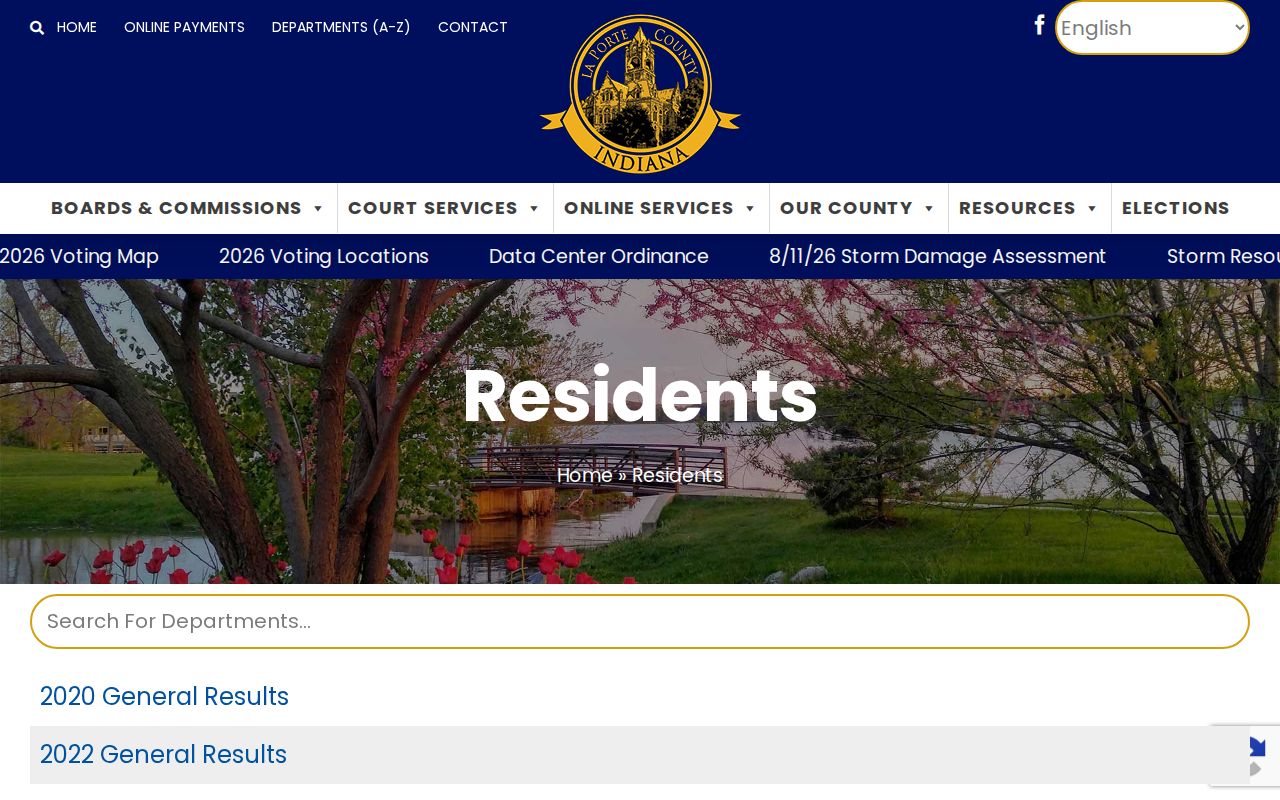
The captured hub helps identify the correct custodian before a search enters a specialized portal.
Access is not limited to websites. The Recorder, Assessor, Clerk, and Health Department publish phone contacts and maintain in-person service. The Recorder and Clerk can provide certified copies within their authority. Library and Historical Society staff can identify physical collections. A written APRA request fits identifiable agency records that are public but not indexed online.
Beacon Fields for La Porte
The county-linked Beacon system is the address-to-owner starting point. Its public controls support name, address, parcel ID, and map searches. Generic result headings include parcel, alternate ID, address, ownership, city, area, state, assessed value, reference number, and township-range-section data. The local live card was blocked during research, so those generic fields do not prove that every La Porte result exposes every column.
| Search choice | Useful result | Limit |
|---|---|---|
| Name | Assessed parcels tied to an owner spelling | Owner does not mean occupant |
| Address | Street number matched to a parcel | Normalize suffix and direction |
| Parcel ID | One legal tax parcel | Not a postal address |
| Map | Adjacent parcels and jurisdiction | Check the layer date |
The County Assessor page is the official portal route.
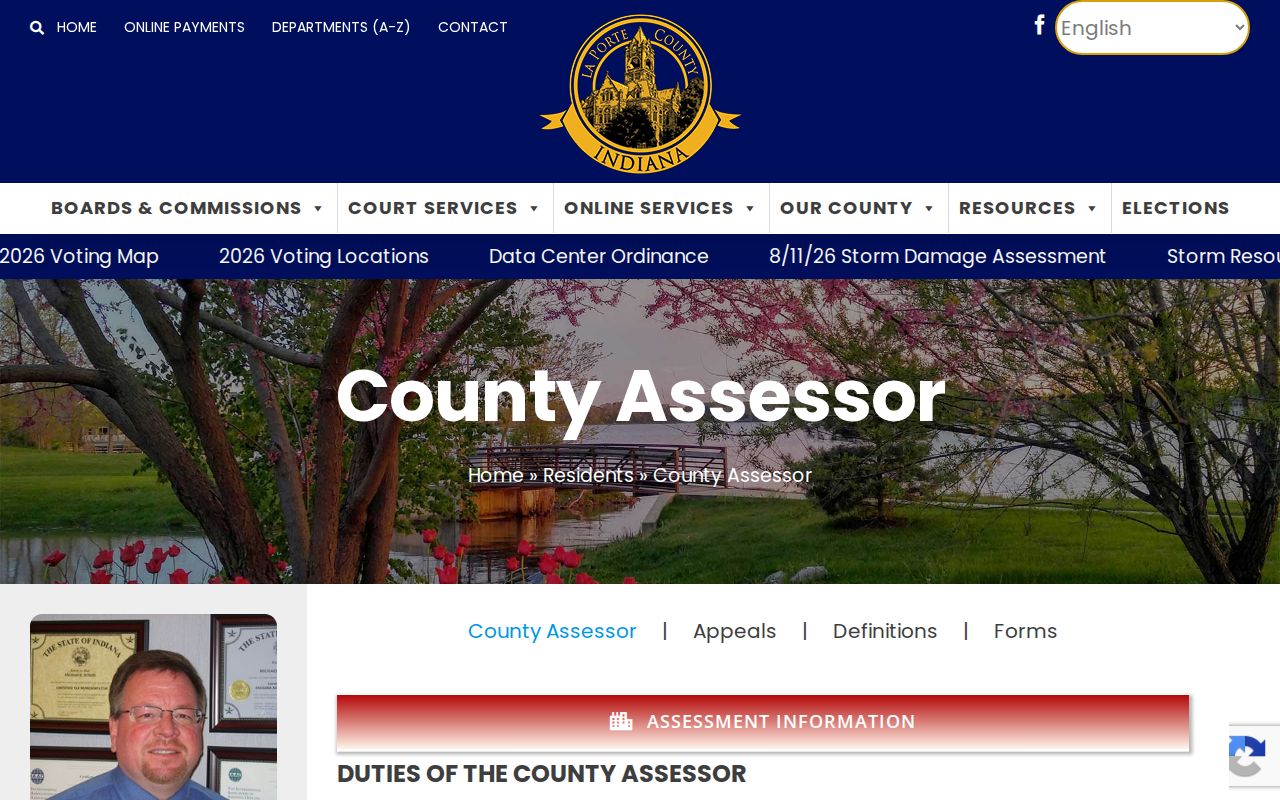
The capture anchors the property search to its custodian even when a live parcel card will not load.
La Porte Deed Name Trail
A property card gives an assessment view. The Recorder index supplies the transaction trail. Tapestry divides searching among Grantor, Grantee, Parcel, and Address sections. A grantor transfers an interest; a grantee receives one. Details can include document type, recording date, book/page, parties, consideration, legal description, associated documents, and image pages.
Search each route separately and reconcile results through book/page or the legal description. The county says real-estate document images run from January 1966 forward, while another recorder description reports deed images back to January 1832. Keep those as separate coverage statements and ask the office which applies.
The Recorder page identifies Tapestry, Laredo, counter access, and certified copies.
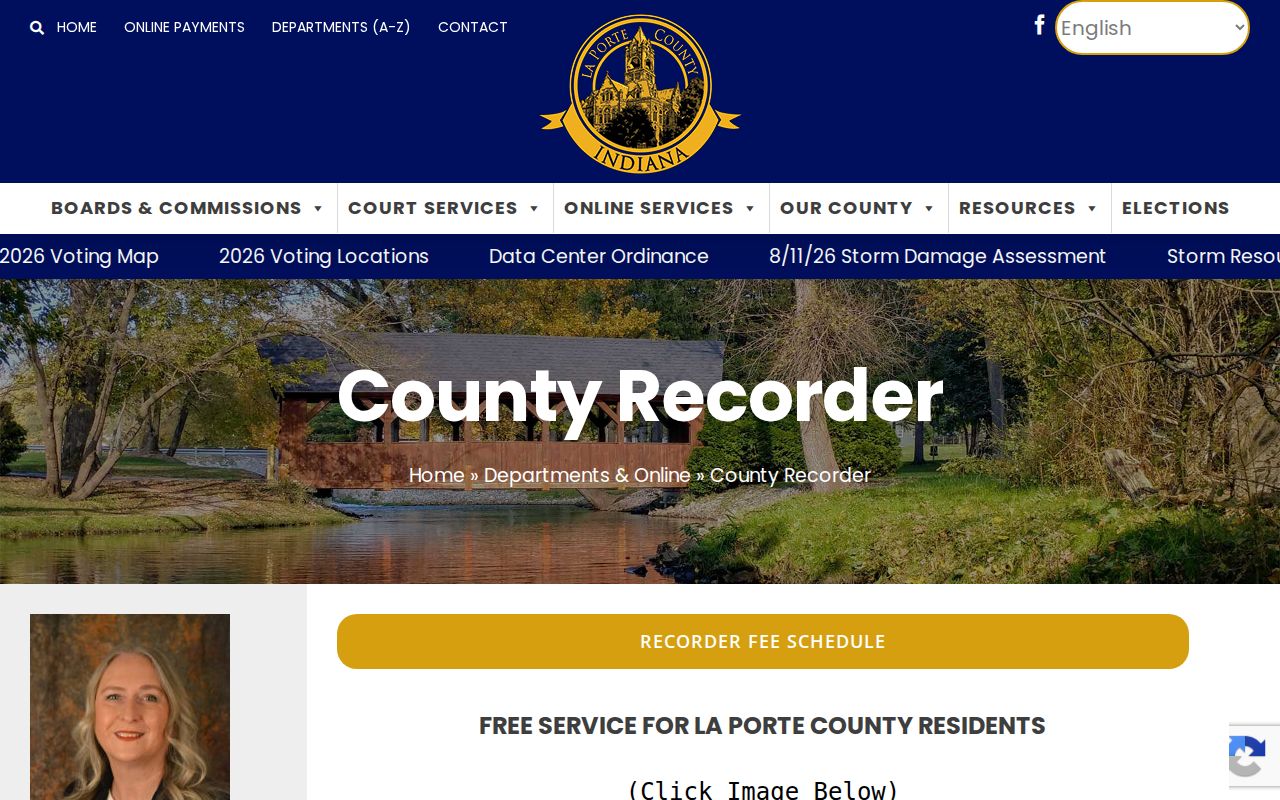
The office route matters when an index appears but its image is paid, missing, or unclear.
Note: An index points to a filing; only the recorded image or certified copy supplies the full instrument.
Current La Porte Resident Rolls
Current directory-like systems cover different groups. The assessor focuses on parcels, Indiana Voters confirms registration status, MyCase indexes eligible court records, and state license or business searches identify public professional and entity roles. None is a full list of households.
| Source | Who It Lists | Keeper | Access |
|---|---|---|---|
| Beacon property information | Assessed owners | County Assessor | Portal, phone, counter |
| Tapestry instruments | Parties to recorded documents | County Recorder | Index, images, counter |
| Indiana Voters | Registered voters | State and county board | Four-field status lookup |
| Indiana MyCase | Public case parties | Indiana courts | Name, case, attorney search |
| PLA and SOS | License or business roles | Indiana agencies | Public web indexes |
Use two independent sources for identity work. A business role is not a residence, a parcel owner may live elsewhere, and voter records have statutory redactions. The one-person method appears on the La Porte resident lookup page.
Indiana's professional license portal can be searched by profession, name, license type or number, city, and state. The Secretary of State business system supports contains, starts-with, and exact-name modes, along with business ID, filing number, registered agent, governing person, entity type, status, and location fields. These systems verify a public role. They do not establish a person's home.
La Porte Court Name Checks
Indiana MyCase provides Case, Name, and Attorney tabs. A result may establish a public case party, court, case number, filing activity, and status. Coverage and documents vary by court, age, and confidentiality. Check a same-name result against court, date range, party role, and a second source.
The Clerk remains custodian for filings, judgments, wills, probate, marriage licenses, and certified copies. Older or non-indexed files may require a phone, written, or counter request.
The Circuit Court Clerk page states the local record duties.
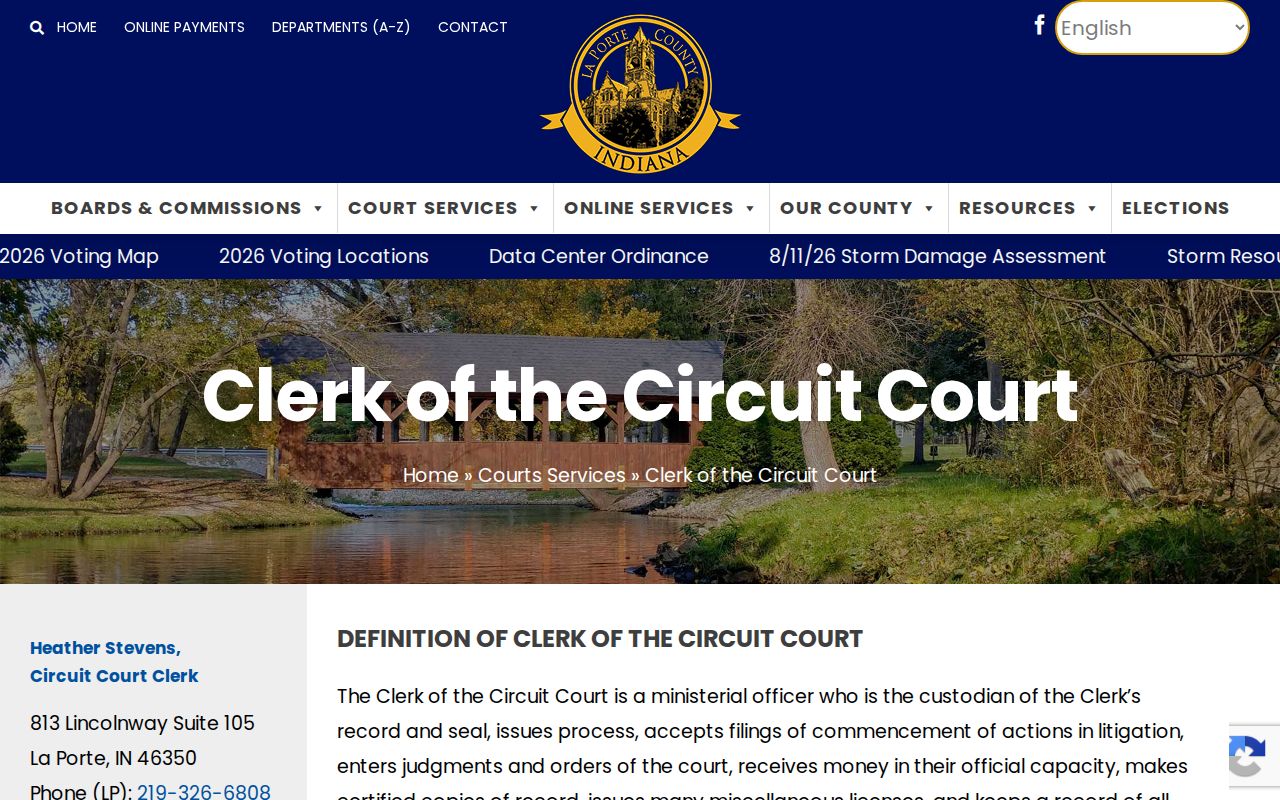
This office route is the fallback for records not available through MyCase.
The statewide portal shows the public search entry point.
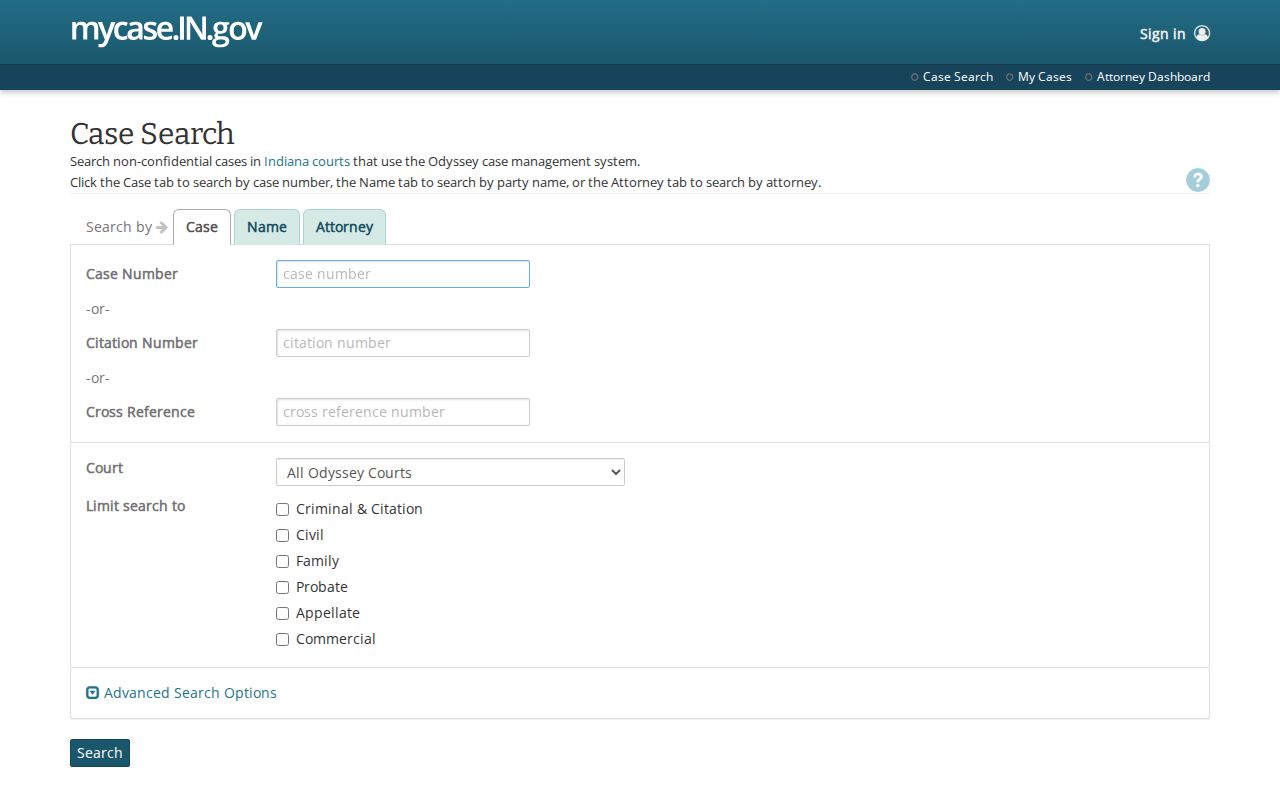
Read the screen as an index interface, not a promise that every document is online.
La Porte Voter Record Limits
Indiana Voters requires first name, last name, date of birth, and county of current registration for a basic status check. La Porte County is a vote-center county. The portal response is narrower than county registration records, which remain subject to statutory redactions and address-confidentiality protections.
For a public record not in the status tool, contact county voter registration and describe it with reasonable detail. Election maps show precinct and voting geography, not a private household roster. Never infer a protected address when Safe at Home or another confidentiality rule may apply.
La Porte Vital Record Dates
The county Health Department states that local birth and death records run from 1882 to the present, with genealogy copies for records older than 75 years. Indiana's state system begins births in October 1907 and deaths in 1900. Early events may require the local route.
Certificates are not open name-only directories. The county requires a qualifying direct interest, photo ID, and an event in La Porte County. Listed local fees effective August 1, 2024 are $15 for a birth record, $15 for a death record, and $5 for a genealogy copy. State terms differ.
The county vital-records page gives the rules.

The capture shows why direct-interest and identification limits remain part of a resident search.
Historical La Porte Directories
The La Porte County Historical Society holds city directories beginning with 1859, plus telephone and business directories, maps, plats, Sanborn maps, house files, obituaries, cemetery material, school records, family files, and newspapers. The library Indiana Room adds late nineteenth-century newspaper microfilm, maps, yearbooks, digital collections, and FamilySearch affiliate access.
Read each city directory as a dated snapshot. Note the volume, year, page, spelling, occupation or business label, spouse notation, and address. Then compare the household with a map, deed, newspaper, or later volume. The full shelf method appears in the La Porte city directory collections.
The Indiana Room in the 1920 Carnegie library building can bridge an online gap with microfilm, maps, yearbooks, and affiliate catalog access. Historical Society resources add house and family files, tax and WPA indexes, cemetery material, and business records. Search “La Porte” and “LaPorte,” try street variants, and preserve the page image or call number with every transcription.
La Porte Maps Add Context
La Porte has city views from 1854, 1866, and 1889, indexed atlases from 1874 and 1892, later plat books, Sanborn maps, and current parcel GIS. Pine, Stone, and Clear Lakes, rail corridors, trails, and the Michigan border help explain why postal, township, county, and parcel labels may not align.
The county GIS page identifies parcel, address, centerline, and zoning resources.
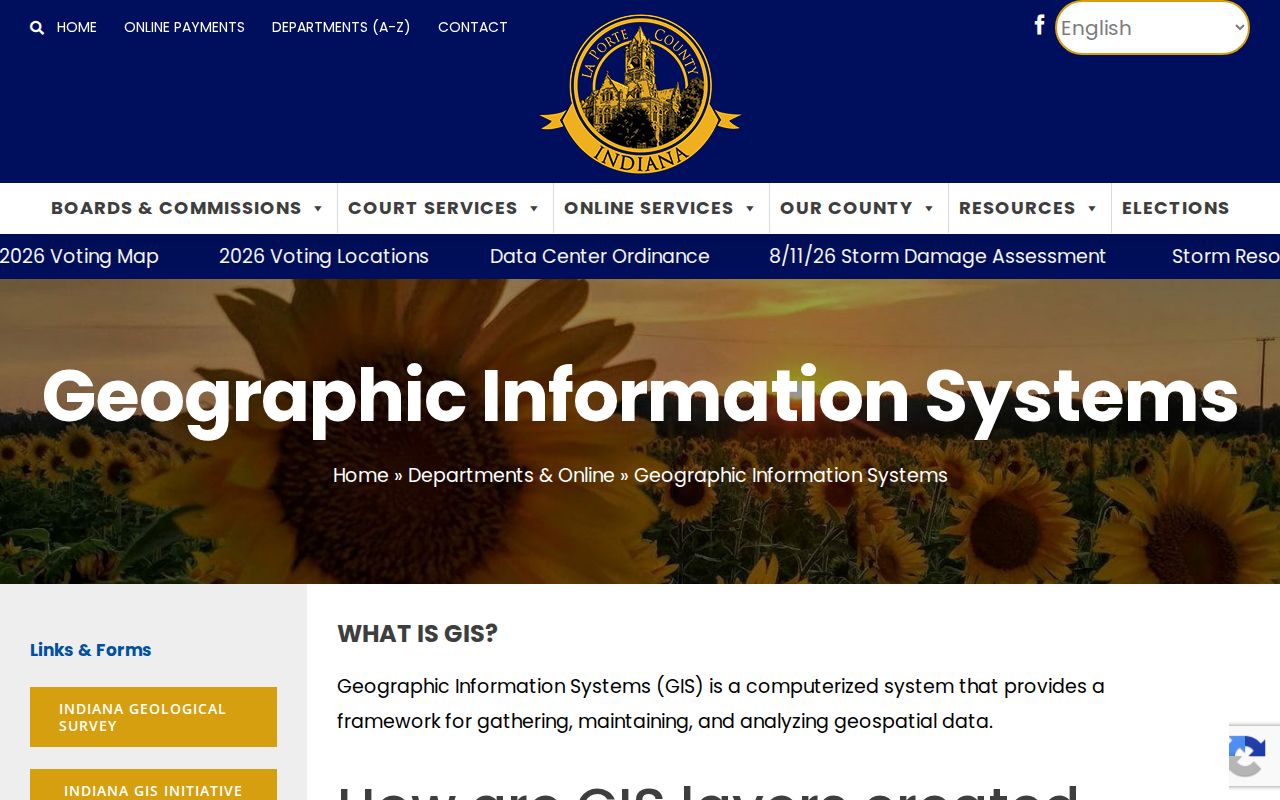
GIS supplies modern geometry, while historical maps show how a lot or building appeared at a dated point.
- Parcel
- A mapped tract used for assessment and land records.
- Index
- A finding aid that points to a record but may omit its text.
- Criss-cross directory
- A volume arranged by street and address rather than surname.
- Certified copy
- An official copy authenticated by the custodian.
La Porte Street Number Clues
Current city code begins numbers at 100, advances one number per 50 feet, and puts odd numbers on north and east sides with even numbers on south and west. The primary entrance controls assignment. Those rules explain the modern grid, but not whether an old address used today's number.
For a former address, search the exact street in the Historical Society's directory run. Ask City Engineering for address-assignment cards, street lists, project files, and any old-to-new crosswalk. Research found no official historical renumbering announcement, so guessing would be unsafe.
Four clocks. Compare the deed date, GIS layer date, directory year, and USPS check date before treating an address conflict as an error.
La Porte Offline Search Routes
Dynamic portals fail, and online indexes can omit old images. Call or visit the Recorder, Clerk, Assessor, Health Department, Sheriff Records Division, library Indiana Room, or Historical Society. Give a narrow name, address, record type, and date range.
Indiana's Access to Public Records Act, IC 5-14-3, provides another route. Oral or in-person requests are acknowledged within 24 hours; mailed, faxed, or emailed requests within seven days. These are acknowledgment windows, not production deadlines. Exempt parts may be redacted.
The Indiana Public Access Counselor publishes APRA guidance.

This is the reference when a local record is not supplied through routine portal or counter access.
La Porte Sheriff Record Paths
The Sheriff's Records Division handles its own requests and explains closed-report limits. JailTracker, the state offender locator, offender registry, MyCase, and PACER are distinct systems. A booking, custody row, registration, court case, and disposition must not be merged.
The Sheriff Records Division supplies the local APRA route.

The office is the reliable fallback because the linked JailTracker stayed on a loading screen during research.
Recent La Porte Record Dates
Indiana published its 2025 GIS harvest and imagery release in December 2025. The county GIS Hub showed a May 2025 page modification, but each data layer still needs its own date. City Engineering links a newer Citizen Service Portal and 2025 paving material. The library digital archive includes a downtown murals collection identified as 2024 and later.
Election material includes a 2026 voting-map link. That map is civic geography, not a household roster. Record the portal check date, underlying record date, and publication date separately.
Downtown building research can combine the library's mural and property-history items with current parcel GIS, Recorder documents, Sanborn footprints, and historic-preservation records. A Certificate of Appropriateness may document an exterior change in a historic district before a building permit. Confirm the district boundary and the current file directly with the city's preservation or building office.
Responsible La Porte Directory Use
Official rolls have clearer custody than commercial compilations, yet even an official index can be stale or incomplete. Commercial tools may merge names, addresses, and phone data without a source date. Treat them as leads and return to the record creator for proof.
| Source | Strength | Next check |
|---|---|---|
| Official index | Named custodian and record family | Underlying image |
| Certified record | Custodian authentication | Current status and scope |
| Commercial compilation | Broad lead | Independent official source |
Lawful use only. Use La Porte records for family history, estate research, civic inquiry, or scam checks, never to stalk, harass, threaten, or harm.
Safe at Home, sealed or expunged cases, juvenile protections, vital-record eligibility, and law-enforcement exemptions can properly hide data. A blank hit means “not found here,” not “no record exists.”